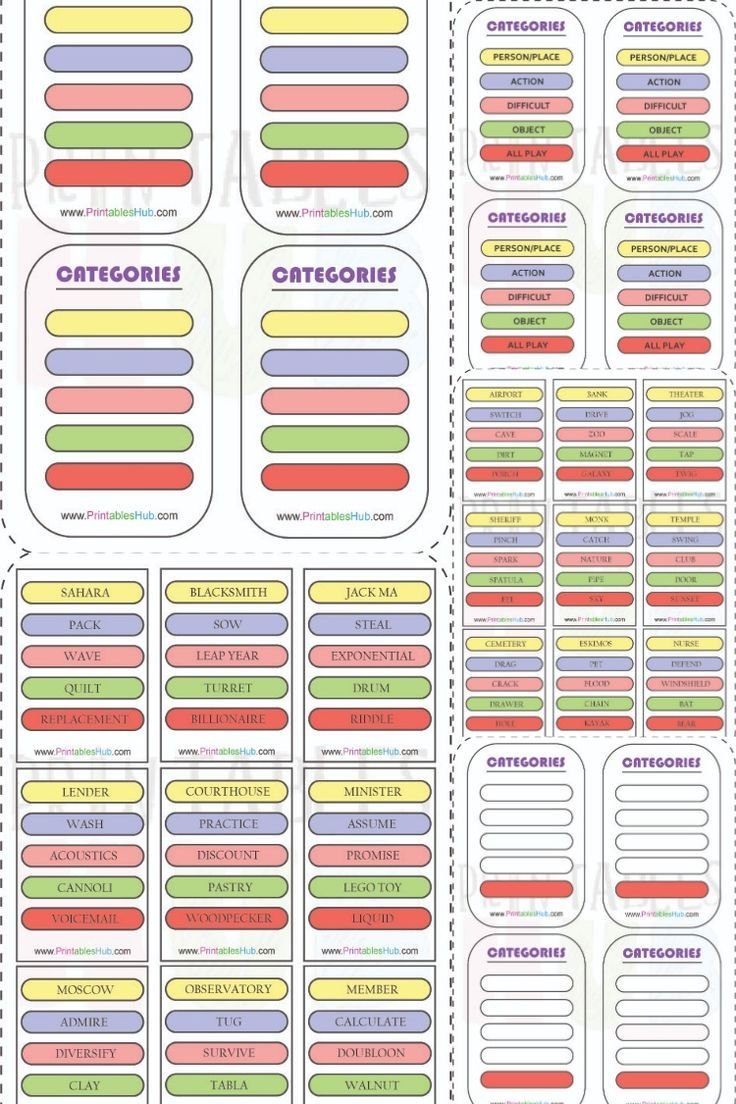
Pictionary, at its heart, is a game of creative communication. It’s about translating a secret word into a visual story, letting your teammates crack the code before the clock runs out. But here’s the secret sauce that truly elevates a good game to a legendary one: brilliant, brainstormed topics.
You might think coming up with Pictionary words is easy—just list a few things, right? But if you've ever stared blankly at a slip of paper, struggling to conjure a draw-able concept, you know the struggle is real. The right topic sparks imagination, fuels laughter, and keeps the energy high. The wrong one can lead to frustrating guesses and a stalled game.
This guide isn't just about listing words; it's about mastering the art of "How to Brainstorm Pictionary Topics" so you can craft an endless supply of engaging, challenging, and downright hilarious drawing prompts for every player and every occasion. Get ready to ditch the dull and draw your way to Pictionary greatness.
At a Glance: Crafting Your Perfect Pictionary List
- Focus on Drawability: If you can't sketch it, skip it. Prioritize concepts that have clear visual representations.
- Know Your Audience: Tailor difficulty and themes to the age and interests of your players.
- Mix It Up: A blend of easy, medium, and hard words keeps the game dynamic and exciting.
- Categorize for Clarity: Themed lists (animals, objects, actions) make brainstorming easier and help guessers.
- Embrace Variations: Use different types of words (single, phrases, abstract-made-visual) to add layers of fun.
- Avoid Pitfalls: Steer clear of overly abstract ideas, obscure proper nouns, or very similar words that confuse.
- Leverage Tools: Don't hesitate to use online generators or physical objects for inspiration when stuck.
Why Great Pictionary Topics Are the Unsung Heroes of Game Night
Think back to your favorite Pictionary moments. Chances are, they involved either an incredibly clever drawing or a truly perplexing (or hilarious) word that led to riotous guesses. That's the power of a well-chosen topic. It's the catalyst for all the fun.
A good Pictionary topic does several things:
- Sparks Creativity: It gives the drawer a clear, yet flexible, canvas.
- Engages Guessers: It provides enough visual cues without being too obvious.
- Balances Challenge & Reward: It’s tough enough to make a correct guess feel earned, but not so impossible it frustrates.
- Keeps the Pace: Smooth, quick rounds often stem from easily visualized words.
Without solid topics, the game can become a series of "What even is that?" moments. With them, every round is an adventure.
Pictionary Basics: A Quick Brush-Up on the Canvas
Before we dive into the brainstorming techniques, let's quickly re-anchor ourselves in the game's mechanics. You need players (four or more is ideal for teams), drawing tools (whiteboard and markers or paper and pencils), a timer, and a scorecard. Most importantly, you need a collection of secret words or phrases.
The Game in a Nutshell: Teams take turns. One player draws a secret word for 60 seconds while their teammates guess. No talking, no letters, just pure drawing. Get it right, get a point.
This 60-second pressure cooker is why your word choices are so critical. The drawer gets about 5 seconds to review the word and plan. That's not much time for an overly complex or abstract concept. Simplicity, coupled with visual distinctiveness, is your friend. Artistic skill is secondary; the ability to visually represent an idea is paramount. So, while you might not be Picasso, with a well-chosen word, you can certainly feel like a Pictionary pro!
The Brainstorming Blueprint: Foundational Principles for Epic Pictionary Words
Effective Pictionary topic brainstorming isn't just about listing random nouns. It requires a thoughtful approach rooted in a few core principles.
1. Keep It Visual: If You Can't Draw It, Don't Pick It
This might seem obvious, but it's the most common pitfall. Concepts like "love," "justice," "freedom," or "wisdom" are incredibly difficult to represent purely visually without resorting to symbols (like a heart for love) that might be too close to letters.
Ask yourself: "Can this be drawn as a concrete object, an action, a scene, or a recognizable character?"
- Good Visual: Apple, Dog, Running, House, Superhero.
- Challenging Visual (for beginners): Democracy, Philosophy, Economy. (Though these can be made visual with advanced techniques, they're generally best avoided for basic lists.)
2. Consider Your Audience: Tailor the Challenge
Who are you playing with? Kids? Seasoned adults? A mixed family group? The ideal word list shifts dramatically based on your players.
- Kids: Focus on simple, easily recognizable objects, animals, and actions (e.g., Ball, Banana, Tree, Jump). Avoid anything too abstract or complex.
- Adults: You can introduce more complex objects, abstract concepts with visual metaphors, pop culture references, and longer phrases.
- Mixed Groups: Aim for a balance. Create separate piles for "Kids" and "Adults" or ensure a good blend of universally recognized terms with a few slightly harder ones.
3. Vary Difficulty: The Spice of Pictionary Life
A list of all "easy" words can get boring quickly, while a list of all "hard" words can lead to frustration. The sweet spot is a mix.
- Easy Words: Build confidence, get points on the board, and loosen up the drawers. (e.g., Bed, Bird, Cup, Dog, Hat)
- Medium Words: Require a bit more thought but are still very draw-able. (e.g., Beehive, Drum, Ferris wheel, Headphones)
- Hard Words: Offer a real challenge and a huge payoff when guessed correctly. (e.g., Applause, Black hole, Dictionary, Time machine)
4. Think Categories: Your Brainstorming Superpower
Categorizing your words isn't just for organization; it's a powerful brainstorming tool. It helps you generate ideas systematically and ensures you have a diverse collection. It can also act as a hint for guessers if you announce the category before drawing.
Common categories include:
- Objects
- Animals
- People (and characters)
- Places
- Actions (verbs)
- Phrases
- Abstract (with a visual twist)
- Seasonal/Holiday
Unlocking Creativity: Proven Strategies to Brainstorm Pictionary Topics
With the foundational principles in mind, let's explore concrete strategies to generate an endless stream of fantastic Pictionary words.
Strategy 1: Themed Rounds – The Obvious, Yet Effective Choice
The simplest and often most fun way to brainstorm is to pick a theme and run with it. This approach also helps ensure a balanced mix of words.
Animals Galore: From Pets to Prehistoric Beasts
Animals are a Pictionary staple because they're often distinct and fun to draw. Think about their unique features or common associations.
- Easy: Dog, Cat, Bird, Fish, Snake
- Medium: Giraffe, Elephant, Octopus, Kangaroo, Dolphin, Zebra
- Hard: Platypus, Meerkat, Salamander, Scorpion, T-rex, Dragon (mythical, but very drawable!)
- Bonus: Think about animal actions – a roaring lion, a jumping frog.
Everyday Objects: The Mundane Made Magical
Look around you! Your environment is brimming with Pictionary potential. These are often easy to visualize.
- Easy: Apple, Cup, Hat, House, Kite, Mailbox, Book, Lamp, Chair
- Medium: Banana peel, Beehive, Chandelier, Headphones, Igloo, Ketchup, Lawnmower, Sleeping bag, Whisk, Wreath
- Hard: Battery, Boardgame, Drum, Ferris wheel, Fireworks, Snowball, Toothpaste, Waffles
Places, Real and Imagined: From the Kitchen to Outer Space
Drawing places often involves sketching key landmarks or characteristics.
- Easy: Beach, Farm, Hospital, Library, Zoo, Kitchen, Bedroom
- Medium: Airport, Aquarium, Bank, Cave, Desert, Gas station, Grocery store, Movie theater, Museum, Volcano
- Hard (or specific): Disney World, Mars, Mount Rushmore, New York City, North Pole, Panama Canal, Paris, Rome, Washington DC (requires some shared knowledge)
Action! Verbs That Bring Drawings to Life
Verbs require you to draw someone doing something, which can be wonderfully expressive and humorous.
- Easy: Run, Jump, Sleep, Eat, Drink, Read, Sing, Dance, Sit
- Medium: Cook, Scratch, Plant, Purchase, Text, Tie, Snore, Catch, Study, Skip, Burp
- Hard: Think (e.g., thought bubble), Imagine, Invent, Recycle, Honk (e.g., car honking)
Pop Culture & Fictional Characters: Modern Fun
This category is fantastic for groups with shared cultural knowledge, from movies to video games to historical figures.
- Easy: Superman, Pirate, Cowboy, Santa Claus, Mailman, Baker
- Medium: Vampire, Leprechaun, Harry Potter, Shrek, Cinderella, Spongebob, Pikachu, Baby Yoda
- Hard (or specific): Justin Bieber, Alexander Hamilton, Queen Elizabeth, Abe Lincoln, Girl Scout, Yoshi (depends on group knowledge)
Seasonal & Holiday Themes: Timely and Festive
These words naturally evoke specific imagery and can be perfect for holiday gatherings.
- Winter: Snowflake, Snowman, Santa Claus, Bell, Candy cane, Chimney, Ice skates, Icicle, Mittens, Penguin, Polar bear
- Spring: Flower, Bee, Butterfly, Chicken, Easter egg, Rain cloud, Umbrella, Tulip, Frog
- Summer: Beach ball, Flip flops, Ice cream cone, Lemonade, Palm tree, Pool, Sunglasses, Watermelon, Barbecue
- Fall: Leaf, Pumpkin, Rake, Scarecrow, Sweater, Apple pie, Corn, Football, Hay bale
Food & Drink: Everyone's Favorite Subjects
Food is universally understood and often easy to draw, from simple items to more complex dishes.
- Easy: Banana, Pizza, Sandwich, Strawberry, Cookie, Cupcake, Lemon, Watermelon
- Medium: Spaghetti, Popcorn, Waffles, Ketchup, Apple pie
- Hard: Bruise (as in "banana bruise"), Vanilla (flavor, might need a symbol like an ice cream cone with 'V' or 'vanilla bean'), Caramel, Espresso
Strategy 2: Difficulty Scaling – Crafting the Perfect Challenge
Beyond just categories, intentionally thinking about difficulty levels can ensure a well-rounded game.
Easy Wins: Building Confidence
These are the words that get teams on the scoreboard quickly, ideal for starting a round or when a team is struggling. They are universally recognizable and have clear, simple visual representations.
- Apple, Bed, Bird, Boy, Cup, Dog, Egg, Ghost, Hat, Heart, House, Kite, Mailbox, Mouth, Nose, Ocean, Smile, Socks, Star, Water.
- For kids: Airplane, Ball, Bicycle, Boat, Car, Carrot, Castle, Clock, Cloud, Computer, Fish, Grass, Moon, Mountain, Sun, Table, Television, Tree, Waterfall, Wizard.
Medium Movers: Engaging the Mind
These words require a little more thought or a slightly more detailed drawing, but are still very achievable within the time limit.
- Banana peel, Battery, Beehive, Boardgame, Book, Bouquet, Bruise, Bubble, Bunk bed, Chandelier, Cookie, Cupcake, Drum, Ferris wheel, Fireworks, Fog, Headphones, Igloo, Ketchup, Lawnmower, Lemon, Rainbow, Sleeping bag, Snowball, Strawberry, Toothpaste, Whistle, Waffles, Whisk, Wreath.
Hardcore Head-Scratchers: For the Masters
These are the words that elicit groans, then applause when someone pulls off an incredible drawing or guess. They might be abstract, complex, or require creative visualization.
- Applause, Atlantis, Black hole, Blizzard, Cardboard, Century, Chest, Coach, Dictionary, Eclipse, Full, Half, Hair, Honk, Internet, Lace, Magic, Mold, Monday, Olympics, Picnic, Ping pong, Puppet, Recycle, Safe, Sandcastle, Sunburn, Sunscreen, Swamp, Think, Time machine, Vanilla, Wax.
Phrases vs. Single Words: The Ultimate Test
While most Pictionary is single words, phrases can be incredibly fun and challenging. They often require drawing multiple elements or depicting an idiom.
- Easy phrases: Happy birthday, Good morning, Red light, Hot dog.
- Medium phrases: Catch a cold, Break a leg, Once in a blue moon, Raining cats and dogs.
- Hard phrases: Burning the midnight oil, Elephant in the room, Steal someone's thunder, Bite the bullet.
Strategy 3: Deconstruct the World Around You – Observational Brainstorming
Sometimes the best ideas come from simply observing.
Look at Your Surroundings: What Do You See?
Take a moment to scan the room you're in. What objects jump out? A lamp? A remote control? A painting? Each one is a potential Pictionary word. Do this in different rooms (kitchen, garden, office) for diverse ideas.
Think of Daily Routines: Actions, Objects, Places
Walk through your day mentally.
- Waking up: Alarm clock, Bed, Sleep, Stretch.
- Breakfast: Coffee, Cereal, Toast, Eating.
- Commute: Car, Bus, Train, Driving, Traffic light.
- Work/School: Computer, Book, Writing, Desk, Teacher.
Emotions & Abstract Concepts (with a Visual Twist)
While direct abstract concepts are hard, you can make them draw-able by focusing on how they look or feel.
- Happiness: A smiley face, someone jumping for joy, a sun.
- Sadness: A tear, a slumped figure, a rain cloud.
- Fear: Wide eyes, a ghost, someone cowering.
- Wisdom: An owl, an old book, a lightbulb over a head.
- Time: A clock, an hourglass, a calendar.
Strategy 4: Leverage Digital Tools – When Inspiration Runs Dry
Even the most seasoned brainstormers hit a wall. That's when digital tools can give you a helpful nudge. There are many online Pictionary word generators that can quickly produce a list of ideas, often categorized by difficulty or theme. They’re fantastic for jump-starting your own creativity or for quickly assembling a fresh list. If you're looking for a quick and diverse set of ideas without the manual effort, a Pictionary topic generator can be your best friend.
Strategy 5: The "What If" Game – Unleash the Absurd
This strategy encourages wild, imaginative combinations that often lead to the funniest Pictionary moments.
- What if an animal did a human job? Mailman dog, Doctor cat.
- What if an object had feelings? Sad toaster, Angry cloud.
- What if something was out of place? Fish in a tree, Umbrella indoors.
These often result in multi-word phrases that are memorable and fun to draw.
Crafting Your Word List: Best Practices for Preparation
Once you've brainstormed a magnificent list of words, how do you prepare them for gameplay?
- Keep Word Slips Consistent: Cut your paper slips to roughly the same size and fold them identically. This ensures fairness and prevents players from trying to identify words by their shape or size.
- Write Clearly: Use legible handwriting or print the words. Ambiguous writing can lead to confusion and arguments.
- Add Categories (Optional but Recommended): For an added layer of strategy or a hint for guessers, you can write the category (e.g., "Animal," "Object," "Action") on the card, or simply separate your folded slips into different containers by category.
- Balance Your Deck: Before you start playing, quickly review your compiled words. Does it have a good mix of easy, medium, and hard? Is it too heavy in one category? Adjust as needed to ensure variety.
- Don't Forget the Timer & Scorecard: While not part of the word list, ensure these are ready and visible for smooth gameplay.
Common Pitfalls to Avoid When Brainstorming Pictionary Topics
Even with the best intentions, certain types of words can derail your Pictionary game. Steer clear of these common traps:
- Too Abstract: Words like "honor," "spirit," "concept," or "destiny" are nearly impossible to draw literally. While you can try to symbolize them, it often leads to frustration. Stick to the highly visual.
- Too Obscure: Avoid highly niche inside jokes, technical jargon, or references that only one or two people in the group will understand. The goal is collective fun, not exclusive knowledge.
- Too Similar: Having "Cat" and "Kitten" or "House" and "Home" in the same deck can lead to arguments about whether a guess counts, even if the drawing was accurate. Ensure distinct concepts.
- Too Many Proper Nouns: Unless you're playing with a group of history buffs or film fanatics, proper nouns (people's names, specific brands, obscure landmarks) can be hit or miss. Stick to widely recognized ones if you use them.
- Overthinking It: Sometimes, the simplest ideas are the best. Don't feel every word needs to be a comedic masterpiece. A well-drawn "tree" can be just as satisfying as a complex phrase.
Beyond the Basics: Pictionary Variations for Topic Inspiration
Did you know there are many ways to play Pictionary? Some rule variations can even influence your topic brainstorming.
- Open Guessing: If all players can guess (not just teammates), you might lean towards more universally recognizable words to keep everyone engaged.
- Continuous Drawing: If a team gets to draw another word immediately after a correct guess (until time runs out), you might want a higher concentration of easy-to-medium words to maintain momentum and allow for multiple points per turn.
- Head-to-Head Play: When two drawers draw the same word simultaneously, ensure the words are clearly draw-able and offer fair competition.
Consider these variations, explained in more detail in various guides, as you curate your list. They can inform whether you stack your deck with quick wins or challenging puzzles.
Your Ultimate Pictionary Topic Toolkit
You now have a powerful toolkit for brainstorming Pictionary topics. Remember, the goal is always fun. Don't strive for perfection; strive for engagement and laughter.
Start by considering your audience and balancing difficulty. Then, dive into categories – animals, objects, actions, places, and pop culture – to generate specific ideas. Don't be afraid to get a little silly with the "What If" game, or use a Pictionary topic generator when your own well of ideas runs dry.
With these strategies, you'll never face a blank slip of paper with dread again. Instead, you'll be ready to unleash a cascade of creative, funny, and perfectly draw-able Pictionary topics that will make your next game night an unforgettable success. Grab your markers, hone your imagination, and get ready to draw some truly epic Pictionary memories!